
You may have heard the term age-related macular degeneration (AMD) and wondered what it could mean for your vision. Our team at Great Hills Eye Care knows that AMD can change how you see the world, which is why we believe in providing our communities with simple, convenient ways to protect their vision.
Wet macular degeneration is a form of AMD where new abnormal blood vessels grow beneath the back of your eye (the retina) and affect your central vision. These new vessels are fragile and can leak fluid or blood, which can interfere with the part of your eye responsible for sharp, detailed sight.
A Simple Look at This Eye Condition
Your macula is a tiny spot at the back of your eye that helps you read, recognize faces, and see objects with clear detail. It gives you the sharp, straight-ahead vision you use every day. Wet AMD affects this area.
The growth of these leaky blood vessels is why this condition is called the “wet” form. While wet AMD is less common than dry AMD, which usually affects vision slowly, vision changes with the wet form can happen quickly.
Signs to Watch For
Because wet AMD can progress rapidly, it helps to know what signs to look for. You might notice that your clear, central vision just doesn’t seem right. Some common experiences include:
- Straight objects or lines, like a doorframe or a signpost, appear wavy or bent.
- A blurry or dark spot shows up in the middle of your vision.
- You find it more difficult to recognize familiar faces.
- Words on a page look fuzzy when you try to read.
- You need much brighter light than usual for reading or other close-up activities.
Influences of Wet AMD and At-Risk People
Wet AMD often develops in people who already have the dry form of the condition, which is why ongoing eye disease management is such an important part of care. While the exact reason for the new blood vessel growth is not completely understood, certain factors can increase your risk.
Common Risk Factors
- Age: The condition is most common in individuals over 50.
- Family history: Having a family member with AMD can be a factor.
- Smoking: This habit significantly increases your chances of developing eye conditions, including AMD.
- Overall health: Your heart and blood vessel health can also play a role.
How Your Eye Doctor Can Check for Wet AMD
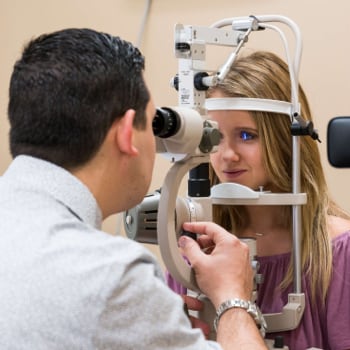
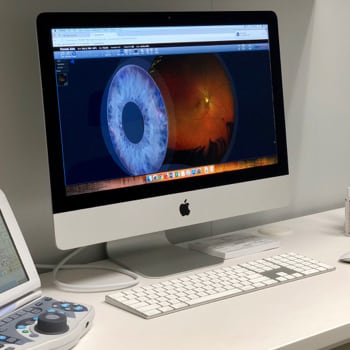
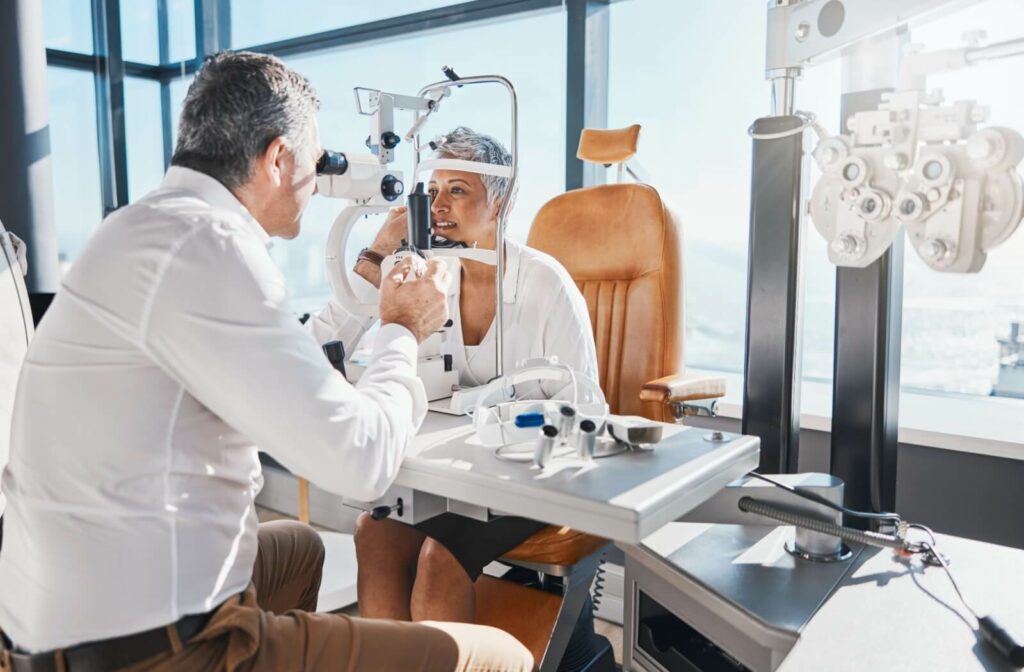
Regular eye exams are a key part of monitoring your eye health. During a comprehensive eye exam, the eye doctor can look at the back of your eye to check the health of your retina (the back of your eye) and macula. This helps the optometry team spot small changes, sometimes even before you notice them, helping protect your sight for the long term.
Treatment Options and Lifestyle Tips
If wet AMD is found, the goal is to slow down the condition and help prevent vision loss. Your eye doctor can talk with you about different approaches and find one that fits your specific needs.
Manage the Condition
A common way to treat wet AMD is with medication. This can help slow the growth of leaky blood vessels and prevent harm. Your eye doctor can create a care schedule tailored to your individual needs.
Healthy Habits for Your Eyes
Simple lifestyle adjustments can also support your overall health, which is connected to your eye health. Try some of these tips:
- Eat a nutrient-rich diet: Leafy greens and colorful fruits can support your eye health.
- Add fish to your diet: Fish, like salmon, contain omega-3 fatty acids, which are good for the whole body.
- Stay active: Regular physical activity is good for your circulation, including the tiny vessels in your eyes.
- Don’t smoke: If you smoke, getting support to stop is a great step for your health.
Get Support with Your Eye Health
For something as important as your vision, routine care makes a difference. Whether you need an eye doctor in Georgetown, North Austin, or Pflugerville, the team at Great Hills Eye Care is here to provide personalized care. Book your appointment with us today, and make your eye health a priority.