Key Takeaways
- Your kidneys and eyes share many of the same tiny blood vessels, so trouble in one can show up in the other.
- Diabetes and high blood pressure can affect both organs at the same time.
- Kidney-related eye changes often include dry eyes, retinopathy, glaucoma, and cataracts.
- Regular eye exams and modern testing can catch problems, often before you notice symptoms.
- Our team offers same-day or next-day appointments across North Austin, Georgetown, Liberty Hill, and Pflugerville.
Your eyes and kidneys might seem unrelated, yet they share more than you’d expect. Both depend on healthy blood vessels, and problems in one can quietly show up in the other. Our team at Great Hills Eye Care can help you see how the two connect.
Yes, kidney disease can affect your eyes, because both organs rely on the same small blood vessels and are hit by the same health issues like diabetes and high blood pressure.
How Your Kidneys and Eyes Are Connected
Your kidneys work like a filter, cleaning waste and extra fluid from your blood every minute of the day. When that filter starts to slow down, the leftover waste stays in your bloodstream and can travel to sensitive spots, including your eyes.
When your kidneys can’t filter well, pressure inside your blood vessels can climb. That extra pressure can strain the delicate vessels behind your eyes and change how clearly you see. So keeping an eye on kidney health can help protect your vision, too.
Common Eye Problems Linked to Kidney Disease
Dry and Irritated Eyes
Your eyes might feel gritty, red, or sore, like there’s sand caught under your lids. When your kidneys struggle to filter, minerals can build up and settle in your eyes, leaving them dry and uncomfortable throughout the day.
Retinopathy
The blood vessels in your retina are thin and easily damaged. High blood sugar and high blood pressure can weaken them, and there are often few signs until your vision starts to change. That’s why a look inside your eye matters, even when things feel fine.
Glaucoma and Cataracts
Pressure can build inside your eye and slowly damage the optic nerve, which carries pictures to your brain. Cataracts are different. They cloud the lens and can blur or dim what you see, like looking through a foggy window.
Warning Signs to Watch For
Some changes come on quietly, while others appear quickly. If you notice any of these signs, reach out to our team so they can take a closer look:
- Blurry, double, or cloudy vision
- Flashing lights, floaters, or dark spots in your view
- Pain or a feeling of pressure in your eyes
How Eye Exams and Modern Testing Support Your Care
What Happens During an Exam?
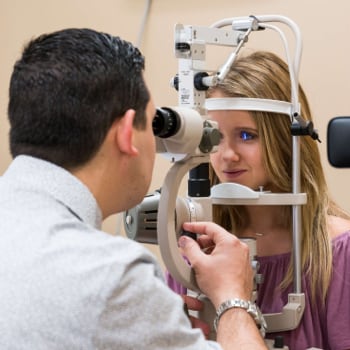
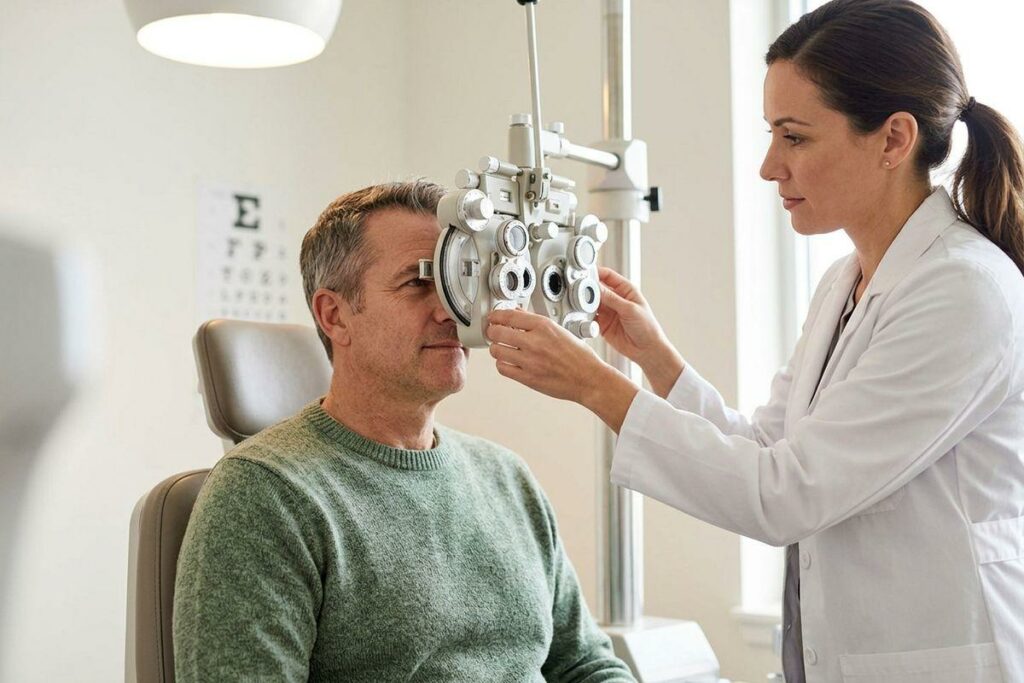
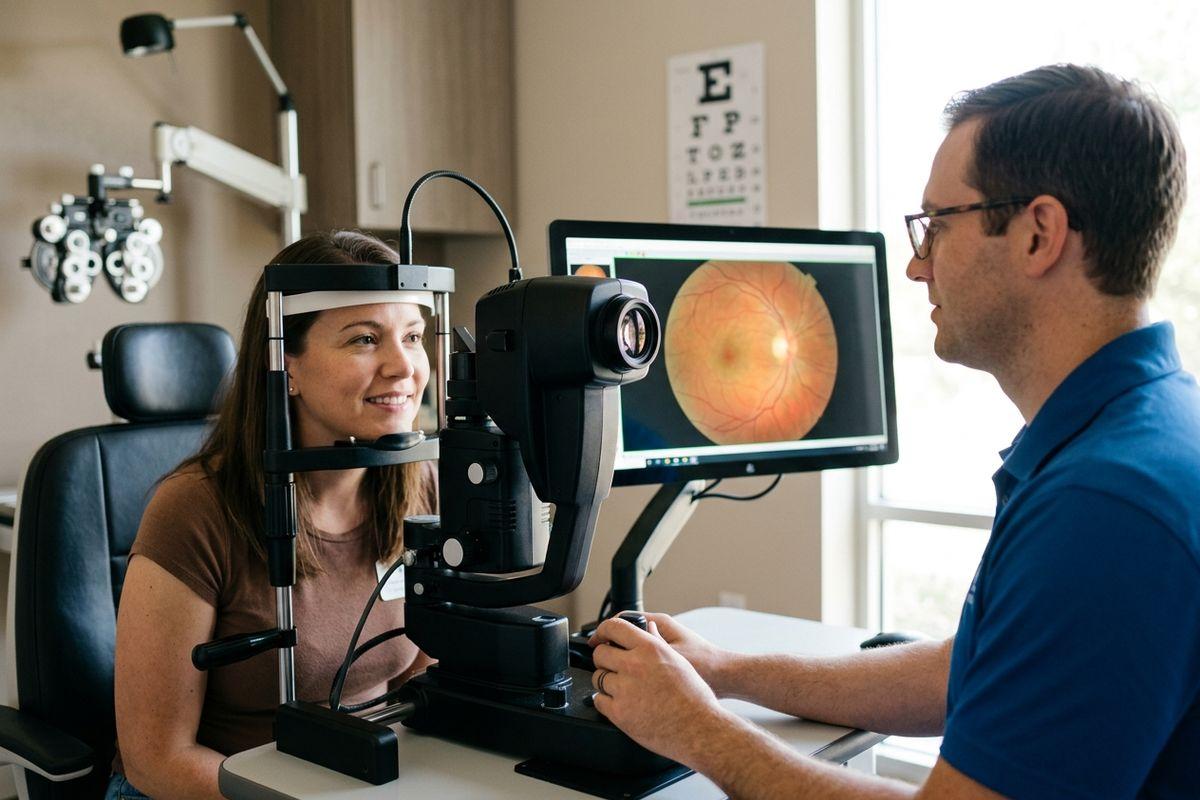
An exam starts with a simple vision check, then moves to a review of your overall eye health. Your eye doctor examines your retina, optic nerve, and the vessels inside your eye. This can help catch small changes early, often before you feel a single symptom.
Personalized Testing for Your Needs
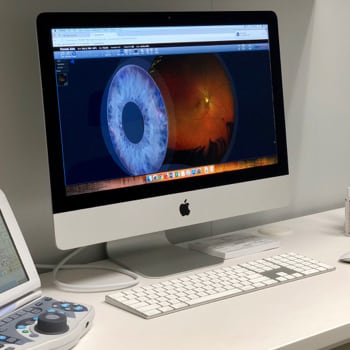
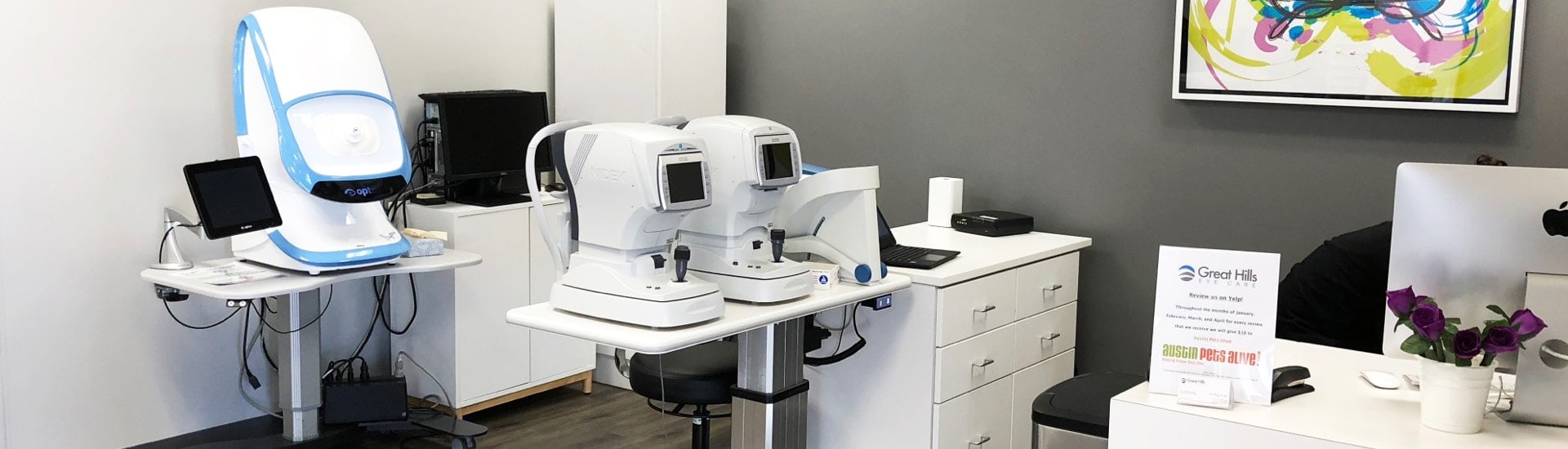
No two sets of eyes are the same, so our team uses modern testing tailored to your health history and your daily needs. If you’re managing diabetes, high blood pressure, or kidney concerns, that closer look can guide your care and give you a clearer picture of what’s happening.
Simple Ways to Protect Your Eyes and Kidneys
Small daily habits can support both your kidneys and your vision. Here are 3 steps you can start on today:
- Keep your blood pressure and glucose levels in a steady range so your vessels stay under less strain.
- Follow your diet, exercise, and medication plans to help your whole body work smoothly.
- Quit smoking and schedule regular eye exams so problems get spotted early.
Come See Us
Your eyes can share a lot about your overall health, and a routine visit can help you stay ahead of changes. Great Hills Eye Care offers personalized attention, dry eye therapies, and modern testing in a convenient spot next to Costco. Call today to book a same-day or next-day appointment and give your eyes the care they deserve.