Key Takeaways
- Laser surgery helps flatten the cornea to improve distance vision.
- Your prescription needs to stay stable for one year before surgery.
- Temporary dry eye may occur during the healing process.
- MiSight contact lenses offer a proactive approach for children.
- Convenient local care makes scheduling routine eye exams simple.
Have you noticed blurry road signs during your evening commute, or struggled to read the menu at your favorite coffee shop? Squinting might help for a second, but the blur always comes back, making everyday tasks feel exhausting. If you are ready for a permanent change, our friendly team at Great Hills Eye Care is here to help.
Laser eye surgery can correct myopia, or nearsightedness, by gently reshaping the front layer of your eye to improve distance vision.
The procedure helps light focus properly on the back of your eye. This change means you can ditch your glasses or contact lenses for daily activities.
The Basics of Myopia
When you have myopia, your eyeball has grown slightly elongated from front to back. Because of this extra length, the light entering your eye cannot travel far enough to focus directly on your retina. Instead, the image falls just short.
Your genetics largely dictate this physical shape, but modern habits like heavy screen time can also accelerate these structural changes. When light fails to reach the back of your eye properly, your distance vision blurs. This mismatch forces your eyes to work overtime just to piece the visual puzzle together.
Navigating Daily Visual Strain
Living with nearsightedness means your daily routine is shaped by a constant muscle strain. Close-up tasks like checking your phone or reading a book feel perfectly effortless. However, looking across the street or scanning a menu quickly becomes an exhausting game of hide-and-seek for your eyes.
You might find yourself constantly squinting, which temporarily changes the shape of your eye to force light a bit further back. But this subconscious habit leads to frequent headaches and physical fatigue by midday.
Laser Surgery Options for Your Vision
LASIK and SMILE Procedures
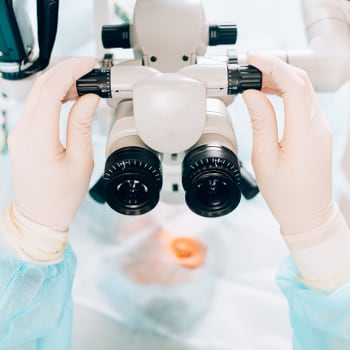
Modern corrective surgeries use high-tech lasers to change the shape of your cornea, which is the clear front window of your eye. This changes how light bends as it enters your eye so you can see clearly. During a LASIK procedure, a laser makes a thin, protective flap on the surface of your eye, almost like opening the cover of a book.
The surgeon then reshapes the tissue underneath to fix your vision before smoothing the flap back down to heal. On the other hand, SMILE is a completely flapless option. Instead of making a big flap, a laser carves a tiny, microscopic disc of tissue inside the layers of your eye. The surgeon pulls this tiny piece out through a tiny keyhole opening, flattening the eye with very little disturbance.
PRK and LASEK Alternatives
If your corneas are naturally thin or uniquely shaped, making a surface flap might not be the safest choice for your eyes. This is where surface options like PRK and LASEK become incredible choices. Instead of cutting deep into the eye tissue, these procedures work entirely on the very top layer of your eye.
During PRK, the outermost layer of eye cells, which is called the epithelium, is completely removed. A laser then reshapes the exposed surface to fix your blurry distance vision. Because that outer layer naturally grows back completely on its own within a few days, it is a highly stable option for strong prescriptions.
Candidates for Laser Vision Correction
Vision Stability and Eye Health
To safely qualify for laser vision correction, your prescription needs to remain stable for at least one full year. Your corneas must also feature adequate thickness to ensure a safe reshaping process. Because a child’s eyes are constantly growing and developing, young patients are not candidates for these surgical procedures.
This continuous development is exactly why proactive myopia management from an early age is so critical. Special treatments can actively slow down eye elongation while a child grows, protecting their long-term ocular health. Once development is completely stabilized in adulthood, permanent laser options can become a choice to explore.
High Myopia Limits
Prescriptions that pass -6 diopters fall into the high myopia category, which requires a highly detailed surgical evaluation. Moderate ranges, like a -4, are generally straightforward for standard lasers to correct. However, extreme nearsightedness might require specialized non-laser alternatives to give you the crispest results.
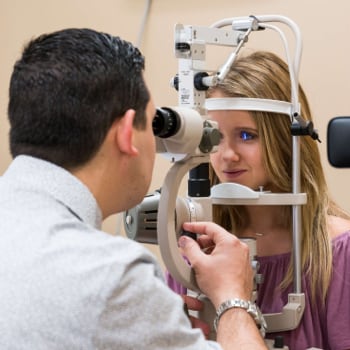
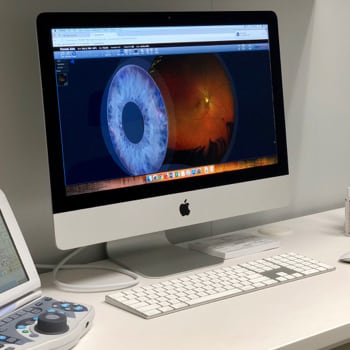
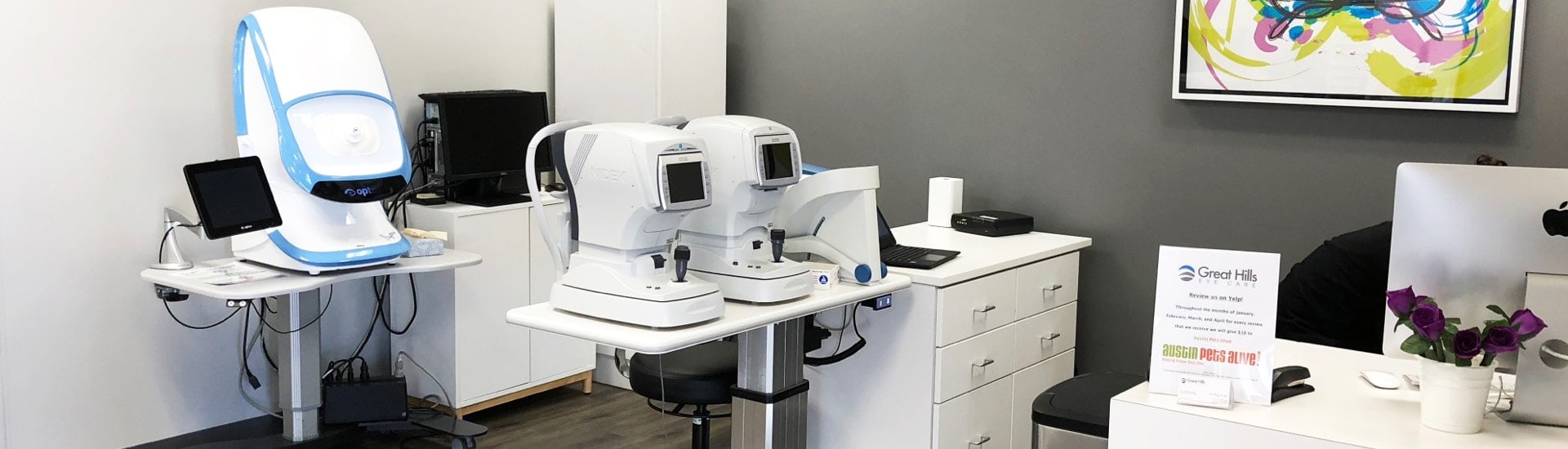
Our passionate team uses innovative diagnostics to map out the exact dimensions of your eyes during a routine exam.

What to Expect After Surgery
Long-Term Clarity
The physical changes made to your cornea during surgery are typically permanent, meaning your distance vision should remain clear for years. However, laser surgery cannot stop the natural biological clock of your body. Around age 40, the internal lens of your eye naturally begins to lose its flexibility, a condition known as presbyopia.
This stiffening makes it harder for your eye muscles to focus on close-up text. Because of this normal aging process, you will likely still need reading glasses for books or menus down the road. Rest assured, your underlying distance correction should remain intact even as these close-up changes occur.
Temporary Side Effects
During the initial healing phase, it is incredibly common to experience temporary dry eyes for a few months. This happens because the laser briefly disrupts the microscopic corneal nerves that signal your eyes to produce tears. As these delicate nerves completely regenerate, your natural tear film returns to normal.
You might also notice mild light sensitivity or slight halos around headlights during night driving while your corneas settle. Your optometrist may provide dedicated, soothing drops to keep your eyes comfortable and protected throughout this recovery journey.
Alternative Options for Myopia Management
MiSight® 1 day Contact Lenses and Preventive Care
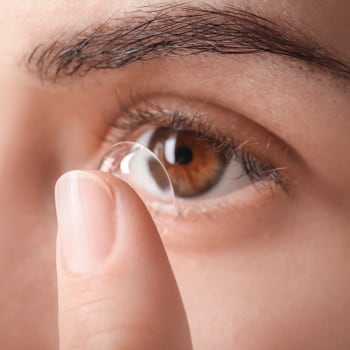
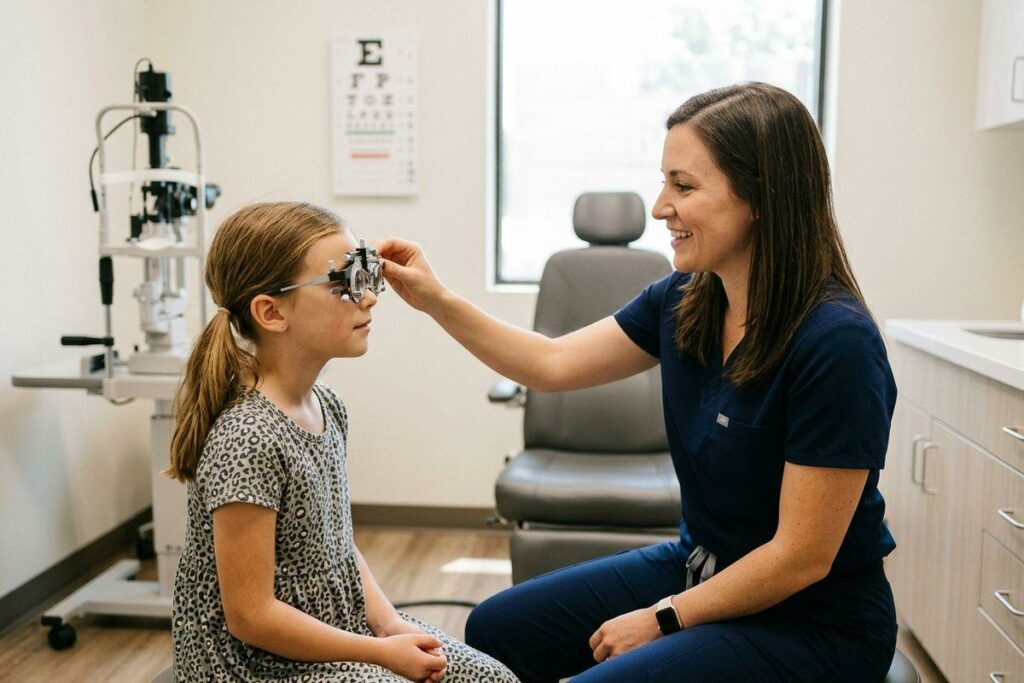
When it comes to your child’s developing eyes, proactive intervention completely changes their visual future. MiSight® 1 day contact lenses are an FDA-approved treatment engineered to actively slow down the progression of childhood myopia. These daily disposable lenses use innovative dual-focus technology to alter how light reaches the retina.
This specific optical design sends a therapeutic signal to the brain, telling the eyeball to stop growing from front to back. By implementing this preventive care during their peak growth years, we can significantly reduce your child’s final adult prescription. This dedicated approach helps protect them from serious long-term ocular health risks down the road.
Convenient Local Care
While Great Hills Eye Care does not perform LASIK surgery in-office, we work closely with trusted LASIK surgeons in the Austin area to provide comprehensive pre- and post-operative care. Through our co-management approach, we help determine whether you’re a good candidate for LASIK, coordinate your referral, and support your recovery every step of the way.
Managing your family’s busy schedule can be a balancing act, which is why our practice is designed entirely around your convenience. We offer convenient online scheduling and strive to provide same-day or next-day appointments whenever our schedule allows. Our passionate team is ready to welcome you with the straightforward, high-tech care you deserve. We have 4 convenient locations, including Georgetown, Pflugerville, North Austin, and Liberty Hill, so taking care of your family’s eyes fits into your busy schedule.
Schedule an appointment for your family today!